






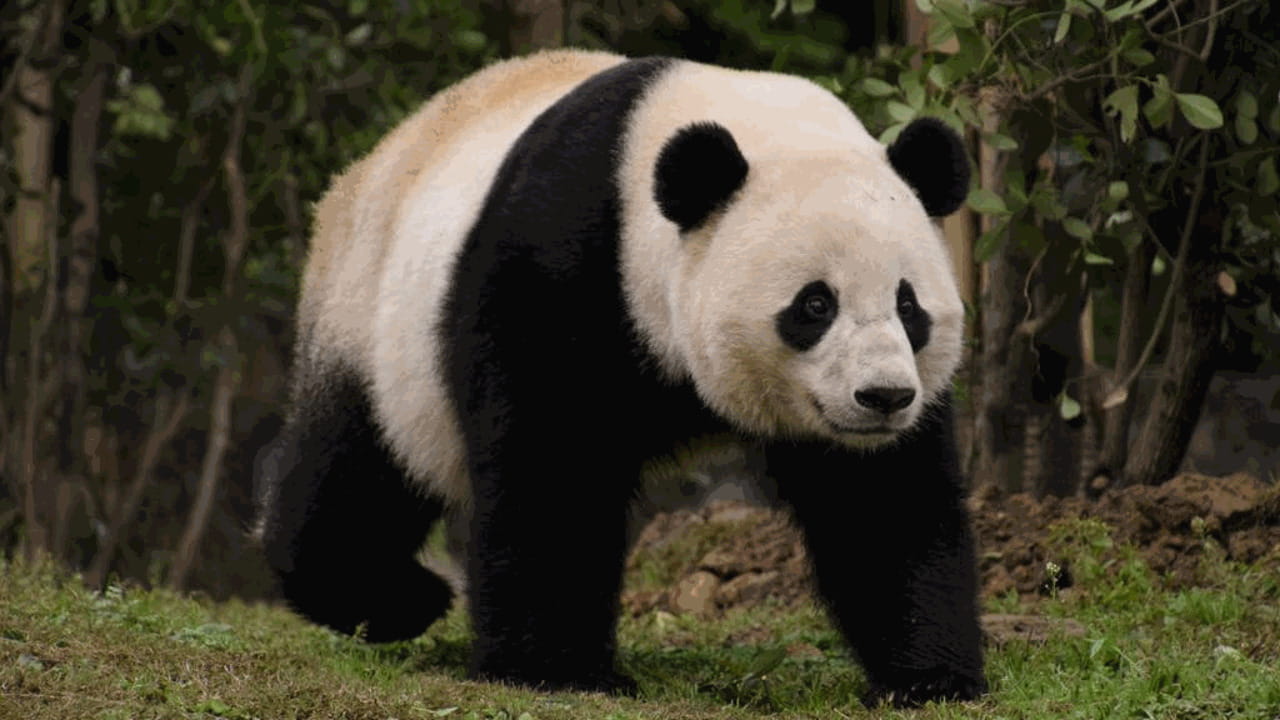
The giant panda's fur hides truly incredible and fascinating secrets. The beauty of the giant panda Its beauty lies not only in its tender expression or the contrast of its two-tone coat, but in the perfection with which this fur adapts to its environment. Every hair, every shade of black and white has a precise function, which goes far beyond appearance. The panda's fur is a system of protection, insulation, and communication, a true "high-level survival tool.".
The Giant Panda's Fur: UV Protection
In the mountainous forests of Sichuan and Shaanxi, the giant panda spends much of the day outdoors, immersed in environments where snow and fog intensely reflect light. In these conditions, the risk of exposure to ultraviolet rays is high, especially due to the altitude. The black fur, thicker and richer in melanin pigment, acts as a natural filter capable of absorbing and blocking most UV rays, protecting the underlying skin from irritation and cellular damage. In essence, it's as if the panda were wearing a coat with built-in sun protection, perfectly adapted to its mountain habitat.
Thermal insulation: the secret to its comfort
The giant panda lives in mountainous habitats where temperatures can easily drop to freezing, especially in the coldest seasons. To cope with these extreme conditions, it has developed an extraordinarily efficient double layer of fur: an outer layer of long, coarse hairs that repel moisture and wind, and an inner layer of dense down that traps warm air close to the body. Together, these two layers create a natural insulation system that functions like a true organic down jacket, allowing the panda to conserve heat and maintain a constant body temperature even on the coldest days.
Camouflage and protection from prying eyes
While it may seem striking and unmistakable at first glance, the giant panda's two-toned coat is actually a sophisticated camouflage system. The large white areas of its body blend in with the snow, fog, and diffused light of mountain forests, while the black areas blend in with the tree trunks and shadows of the undergrowth. This balance of contrasts allows it to go unnoticed in its natural habitat, a precious advantage for a solitary and peaceful animal that prefers to avoid conflict rather than confront it.
A barrier against humidity and parasites
The giant panda's fur also serves a physical protective function, acting as a true barrier against the harsh mountain environment. The outer layer, made of long, thick hairs, protects the body from scratches, insects, and moisture, while the softer, thicker inner layer keeps the skin dry, clean, and thermally insulated. It's a surprisingly efficient natural system, a sort of soft armor that combines comfort and resistance, perfectly adapted to life among bamboo, rocks, and humid slopes.
You may also be interested in:
Coat color as a sign of well-being
The color of a giant panda's fur can reveal a lot about its health. A shiny, compact, and even coat is a sign of good nutrition, a balanced metabolism, and general well-being. Conversely, a dull or unkempt coat may indicate nutritional deficiencies, stress, or minor internal disorders. Even the slightly yellow hue, often visible in adult pandas, is a natural phenomenon due to the oil secreted by the skin. It serves as protection against humidity and cold, not a sign of poor hygiene. In research and conservation centers, experts routinely observe the fur as an indicator of the animals' physical condition, because every change in the coat reveals something about their health and environmental balance.
Fur as a language
The giant panda's spots aren't a coincidence, but the result of evolution, also linked to communication. The dark areas around the eyes amplify facial expressions and help pandas recognize each other, an important aspect for a species that lives largely alone but maintains visual contact with its own kind. The black ears and shoulders also play a communicative role; they can indicate presence, intent, or dominance, especially when defending territory. In this way, the panda's fur becomes a true visual language, a means through which the animal tells, communicates and establishes connections with its world.
A masterpiece of adaptation
Observing the giant panda's fur is like entering a story of extraordinary adaptation. Every function—from protection against ultraviolet rays to camouflage and social communication—reveals nature's incredible ingenuity in creating solutions tailored to each environment. This coat is a symbol of patient and gentle survival, yet sophisticated and precise, just like the panda's own personality: a perfect balance between strength and delicacy.
The “imperfect” fur that really protects
It might seem strange, but a panda with slightly yellow fur or a slightly dusty and dirty appearance isn't a sign of poor health. Quite the opposite. That shade is completely natural and is due to the presence of a layer of oil covering the fur. This greasy substance has a fundamental function: it waterproofs the fur and helps the panda keep its body warm and dry even in the most humid areas of its habitat. Frequent bathing or excessive exposure to water would remove this protective barrier, making the coat less effective against the cold and humidity. In other words, even a "not perfect" fur coat is actually perfectly functional for the giant panda's survival.
Why do pandas lose their fur? The most common causes.
Have you ever wondered why pandas sometimes appear with irregular spots on their fur? It is normal for giant pandas to occasionally lose or break their fur. The most common cause is seasonal moult, which occurs mainly in spring and early summer, just like dogs, bears, and foxes. However, there are other reasons as well: parasitic, fungal, or bacterial infections can cause hair loss, as well as environmental factors such as high humidity, excessive heat or frequent bathing.
A typical behavior of pandas is the rub against trees and rocks when they feel itchy: this friction breaks the hairs, creating small irregular areas that are sometimes mistaken for open wounds (but they are not at all!). Also nutritional deficiencies Or medication side effects can contribute. There's good news. In most cases, this is normal shedding, and the fur grows back on its own. Only if the loss is due to illness do veterinarians intervene with specific treatments.