






The reproduction of the giant panda It's a vitally important event for the species' reproduction. First, it's important to know that giant pandas aren't naturally prolific. Their reproductive rate is quite low. In fact, panda mothers dedicate about 18 months to caring for their cubs. During this period, they generally don't reproduce again. This means that, in most cases, a giant panda gives birth approximately every two years. Let's explore the reasons for this and how it reproduces.
Read also:
Giant pandas in captivity suffer from jet lag: here's why
Panda cubs make public debut in Chengdu: the event
Panda Ai Hin fakes a pregnancy
Why does the male panda live isolated from his wife and children?
Mao Sun è incinta? La risposta dello zoo di Copenaghen
Perché i panda giganti vengono accuditi come bambini
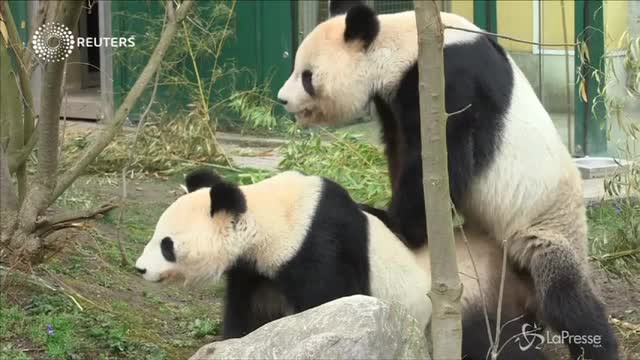
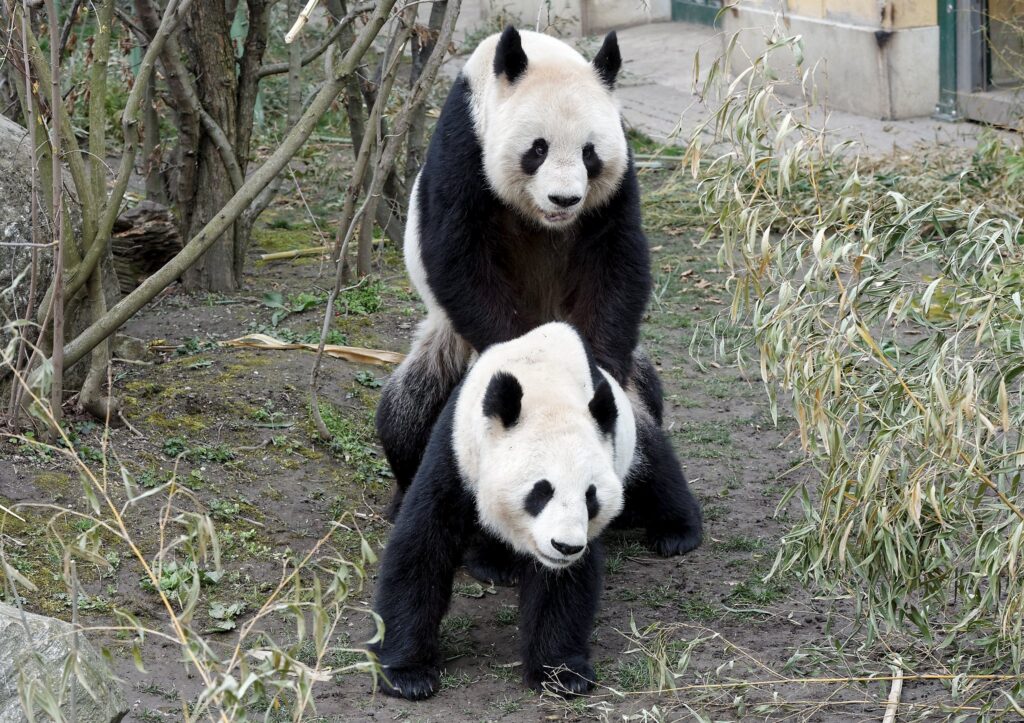
Giant panda reproduction: how does mating occur?
Mating between giant pandas is an event that occurs during a specific time of year and involves a series of behaviors and communications. Female giant pandas are fertile once a year, for a period lasting no more than 2 or 3 days, usually between March and May. Communication between pandas during this period is crucial and occurs primarily through smell. Adult male and female giant pandas gather in one place to understand and attract each other through scent marking and sniffing. During the estrus season, a female giant panda's scent can indicate her readiness for mating and attract males.
At the height of estrus, pandas express their interest through several signals:
- Prolonged moans and chirps.
- Postures ready for mating.
- In addition to olfactory cues, auditory and visual modalities are also put into action.
In wild breeding grounds, up to two to five male giant pandas may fight over the same female. Sometimes, only one male will successfully mate with the same female. Mating most often occurs on the ground, but can also occur in a tree. Subadult or less experienced giant pandas may observe mating to learn. Males' estrus behaviors are derived from those of females. During a mating season, a male may mate with more than one female, and vice versa, a female may mate with several males, indicating that giant pandas live in a polygynous and polyandrous system.
After mating, male and female giant pandas separate and return to live alone. The female undergoes pregnancy, the birth She nurses alone and requires constant loving care, especially after giving birth, as she may appear visibly frightened and disoriented. Furthermore, breeding and reproduction in pandas is very difficult. Some specialists believe the problem lies in the male's meticulous selection of females and refusal to mate if they are not to his liking. Some methods attempted to stimulate mating in captivity include watching pornographic films of other pandas mating, with varying results. Other methods, such as the use of Viagra, are also effective.